Episode 3: Why Energy Efficiency Advances Faster Overseas - Cultural and Regulatory Perspectives
 user
user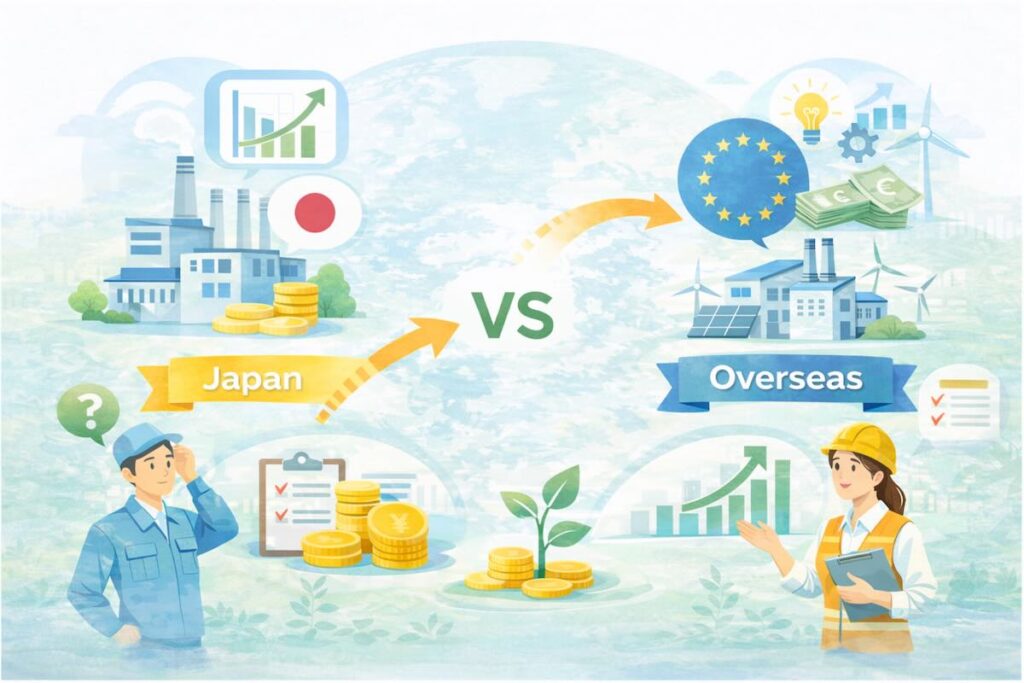
After examining people-driven Energy DX in Episode 1 and investment decisions in Episode 2, this episode takes a broader view.
Many manufacturers ask a simple question:
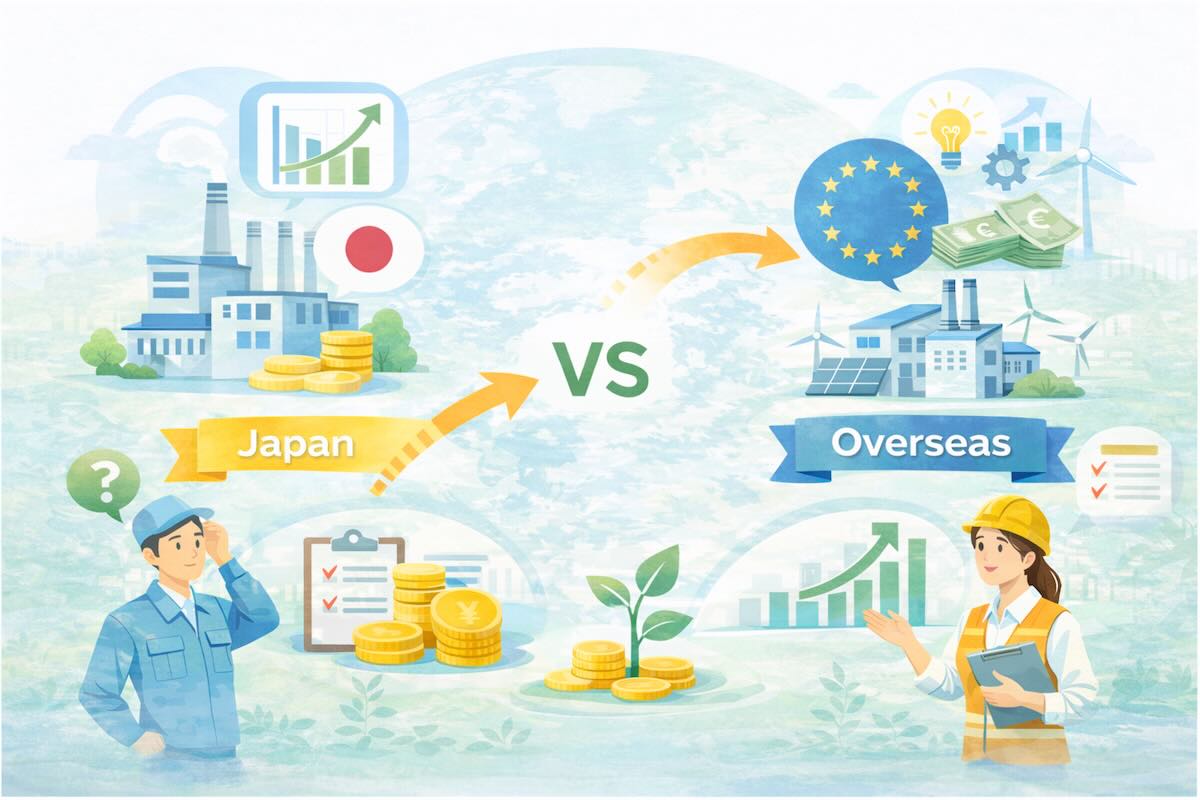
“Why does energy efficiency seem to progress faster in overseas factories?”
The answer is not technology alone.
Behind the scenes, culture, regulation, and management mindset play a decisive role.
🌍 Energy Efficiency as a Social Norm
In many regions outside Japan, energy efficiency is not treated as a special initiative.
It is considered a basic operational requirement.
In parts of Europe, for example:
As a result, factories operate under the assumption that
energy must be measured, managed, and continuously improved.
This social and regulatory backdrop accelerates action.
🏛️ Regulation as a Driver, Not a Barrier
One key difference overseas is how regulation is perceived.
Rather than being seen as a constraint,
regulation often functions as a clear decision-making framework.
When standards are well-defined:
Management does not debate whether to act—
the discussion shifts to how and how fast.
📊 Data-First Thinking in Daily Operations
Another common trait in overseas factories is a strong data-first mindset.
Energy usage, production efficiency, and equipment status are:
Instead of relying on intuition or experience alone,
operations are adjusted based on visible, shared data.
This approach shortens feedback loops and speeds up improvement.
🇯🇵 Japan’s Strength: Continuous Improvement Culture
Japan, however, is far from weak in this area.
Japanese factories are globally respected for:
The challenge is not capability, but integration.
Without clear visibility into energy data,
even strong improvement cultures struggle to target the right actions.
🔁 Bridging the Gap with Energy DX
The fastest progress occurs when:
are combined.
Energy DX provides the missing link:
This integration allows factories to move beyond comparison
and focus on practical, local optimization.
🧩 How Orange Box Supports Global-Level Energy Management
At Orange Box, we help manufacturers adopt global best practices
while respecting local culture and workflows.
Our solutions focus on:
Rather than copying overseas models,
we help factories adapt proven approaches to their own context.
👉 Learn more about Orange Box: Smart Factory Solution
🌱 Learning from Global Perspectives
Energy efficiency advances faster overseas not because factories are “better,” but because systems, culture, and decision-making structures are aligned.
By understanding these differences, manufacturers can:
Global perspectives offer insight—not pressure.
📢 Next Episode
Episode 4: How Manufacturers Can Respond to Rising Electricity Costs
> Read Next Episode
Episode 1: Building Data-Driven Teams for the Energy DX Era

Episode 4: How Manufacturers Can Respond to Rising Electricity Costs — Practical Energy Strategies in an Era of Price Volatility
Episode 2: Decarbonization Costs and ROI - Making Informed Management Decisions

Japan’s Path Toward Decarbonization

Humans and AI: The Future of Smart Factories