Episode 2: Decarbonization Costs and ROI - Making Informed Management Decisions
 user
user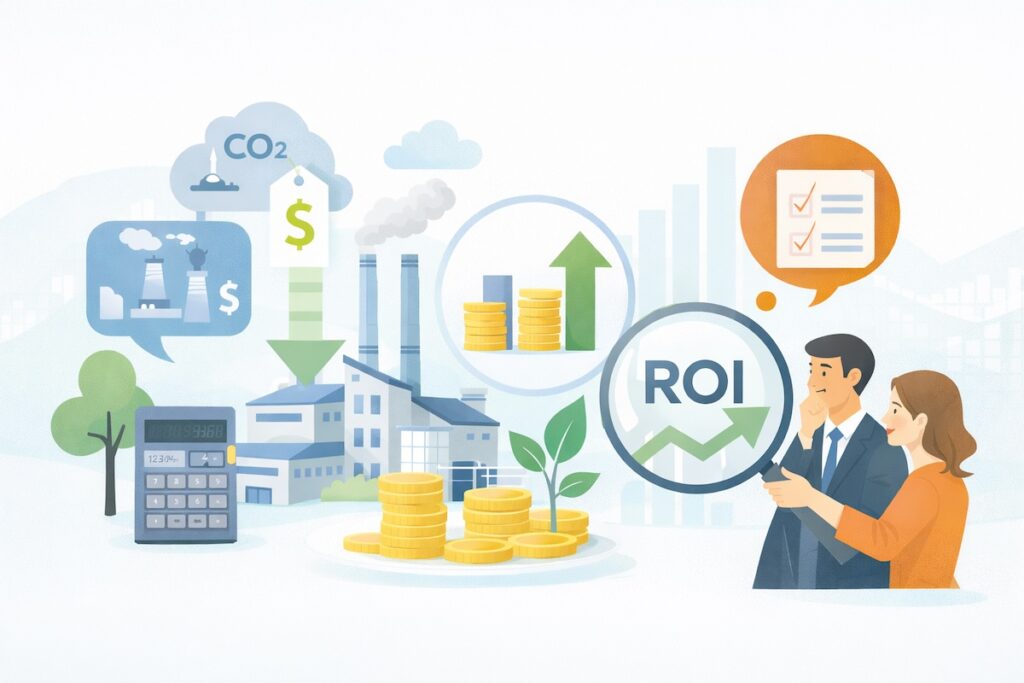
After discussing the importance of people and data literacy in Episode 1,
the next question many manufacturers ask is both practical and unavoidable:
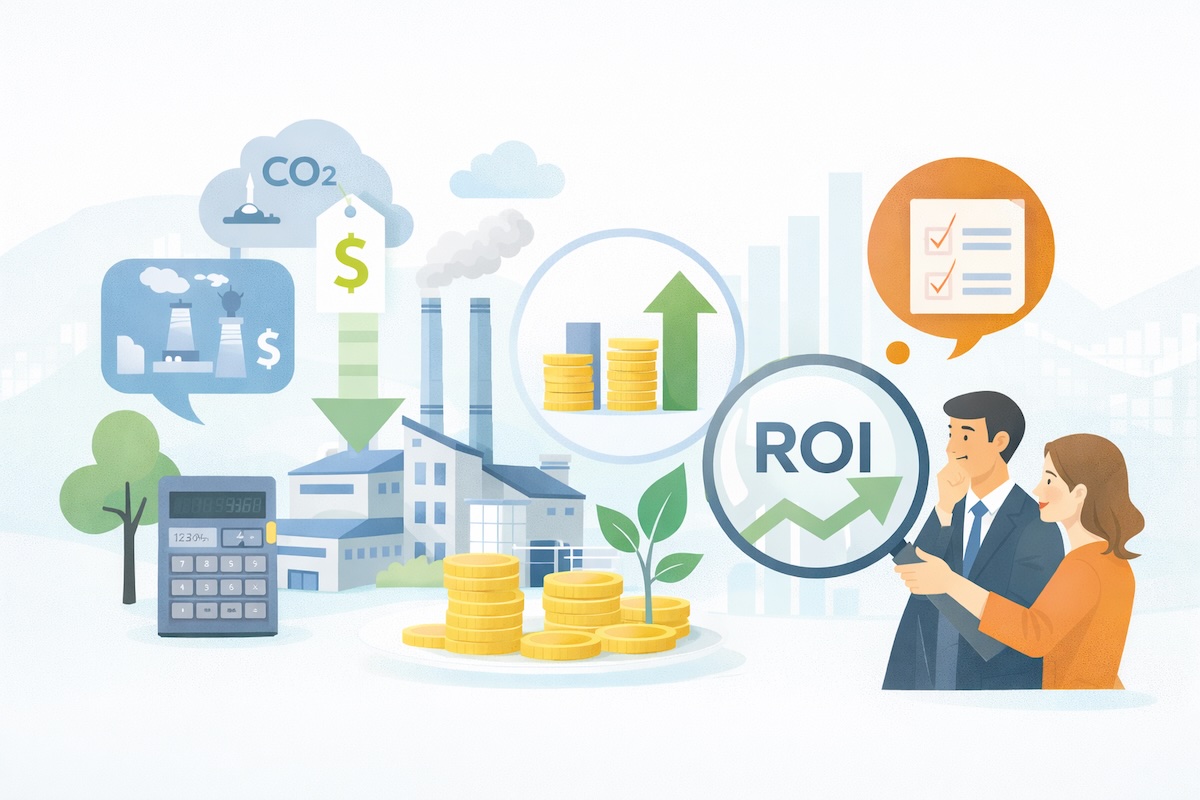
“How much does decarbonization really cost?”
“And can we justify the investment?”
In this second episode, we look beyond surface-level expenses to examine
the true cost—and value—of decarbonization initiatives from a management perspective.
💰 Decarbonization Is Often Seen as a Cost. Is That the Right Lens?
For many organizations, decarbonization initiatives are still framed as:
This perception is understandable. Energy management systems, sensors, and system integration all require upfront investment.
However, companies that succeed in Energy DX approach the issue differently.
They do not ask, “How much does this cost?”
They ask, “What risks and opportunities does this investment address?”
📈 Rising Energy Costs Change the ROI Equation
One key reason management thinking is shifting is the continued rise in energy prices.
Electricity costs are no longer stable or predictable.
Fuel price volatility, geopolitical risk, and policy changes mean that energy cost risk has become a management issue, not just an operational one.
In this context:
ROI is no longer measured only by savings—it is also measured by risk avoidance.
🔍 Breaking Down the “Invisible” Returns
Traditional ROI calculations focus on direct, easily quantifiable benefits:
These are important, but they are only part of the picture.
Less visible—but often more impactful—returns include:
These factors contribute to long-term competitiveness, even if they do not appear immediately on a balance sheet.
🧠 Data Enables Better Management Decisions
One of the greatest advantages of Energy DX is decision clarity.
When energy and operational data are visible and reliable:
Instead of debating opinions, teams can discuss scenarios, forecasts, and measurable outcomes.
This shift reduces hesitation and shortens decision-making cycles.
🧩 How Orange Box Supports ROI-Focused Energy DX
At Orange Box, we support manufacturers not only by visualizing data,
but by helping them translate data into management insight.
Our approach includes:
By making energy usage and operational behavior visible,
we help companies move from uncertainty to informed decision-making.
👉 Learn more about Orange Box: Smart Factory Solution
🌱 Decarbonization as a Strategic Investment
Decarbonization is often treated as a compliance task or short-term project.
In reality, it is a strategic investment in resilience.
Companies that understand their energy usage in detail are better prepared to:
The question is not whether decarbonization costs money.
The real question is whether companies can afford not to invest.
📢 Next Episode
Episode 3: Why Energy Efficiency Advances Faster Overseas
— Cultural and Regulatory Perspectives

Making CO₂ Reduction Visible — How EMS Turns Energy Saving into Measurable Results
“Visualization” Is the Key to Decarbonization — How to Start Energy DX

Taking Decarbonization to the Next Level — A Data-Driven Approach
Episode 2: Decarbonization Costs and ROI - Making Informed Management Decisions
Smart Transformation for Small and Medium-Sized Factories — How Small Steps Can Shape the Future